Rational Pharmacotherapy in Cardiology is a peer-reviewed scientific and practical journal for cardiologists and therapists, published since 2005 with the support of the Russian Society of Cardiology and the National Medical Research Center for Therapy and Preventive Medicine. The Editor-in-Chief is Oksana M. Drapkina, MD, Doctor of Medical Sciences, Professor, Academician of the Russian Academy of Sciences.
Rational Pharmacotherapy in Cardiology is a nationwide Russian journal published 6 times a year.
Its content includes original scientific articles, national guidelines, scientific reviews, lectures, and the results of clinical practice analysis. The journal covers issues of early diagnosis, primary and secondary prevention of cardiovascular diseases and comorbid conditions, effective pharmacotherapy, and current topics in experimental and clinical pharmacology.
The journal is indexed in
- The List of Publications of the Higher Attestation Commission (HAC, K1)
- The Russian Science Citation Index (RSCI)
- Web of Science and Scopus international databases
Open Access Journal (OA, DOAJ).
Full-text issues are available on the Scientific Electronic Library website (www.elibrary.ru) and the journal’s website (https://www.rpcardio.online/jour).
For Authors: Submission guidelines: https://www.rpcardio.online/jour/about/submissions#authorGuidelines
Subscription: http://roscardio.ru/ru/subscription.html
ISSN 1819-6446 (Print)
ISSN 2225-3653 (Online)
The journal was registered on 30.12.2004 and re-registered by Roskomnadzor on 31.03.2022 (PI no. FS 77-82859)
Founder — FSBI "National Medical Research Center for Therapy and Preventive Medicine" of the Ministry of Health of the Russian Federation
Circulation: 5000. Frequency: 6 issues a year
Higher Attestation Commission: 140105 Cardiology, 140306 Pharmacology, Clinical Pharmacology.
3.1.20. Cardiology (Medical Sciences), 3.3.6. Pharmacology, Clinical Pharmacology (Medical Sciences) since 01.02.2022 3.1.18. Internal Medicine (Medical Sciences), 3.1.31. Gerontology and Geriatrics (Medical Sciences) since 08.07.2024
Metrics:
- Two-year RSCI impact factor (2023): 1.019
- SCIENCE INDEX ranking: 9
- Ranked 22nd in the "Medicine and Healthcare" category
Current issue
ORIGINAL STUDIES
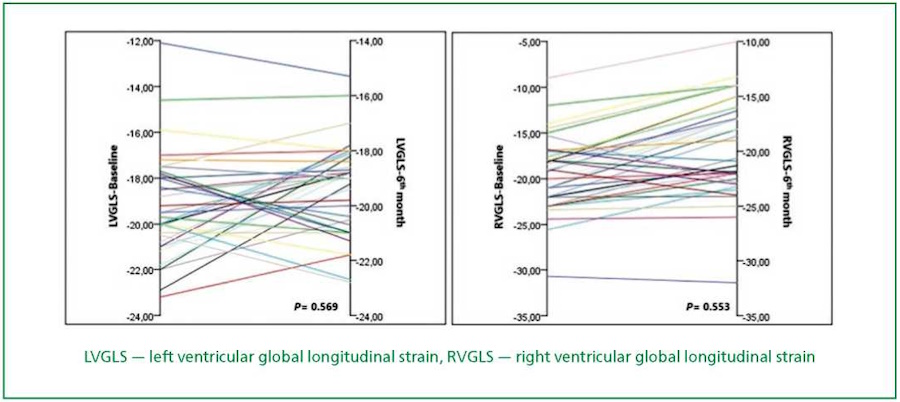
Aim. Тo evaluate the impact of intensive statin therapy on subclinical left (LV) and right ventricular (RV) function using advanced speckle-tracking echocardiography (STE) in patients without coronary artery disease receiving statin for primary prevention.
Material and methods. This single-center prospective study enrolled patients who were planned to initiate high-intensity statin therapy (atorvastatin 40-80 mg or rosuvastatin 20-40 mg) for primary prevention. A total of 38 patients (mean age 51.5±7.6 years; 36.8% male) with low-density lipoprotein cholesterol (LDL-C) levels ≥160 mg/dl and no history of coronary artery disease, heart failure, or hypertension were included. Conventional echocardiography and two-dimensional STE were performed at baseline (before therapy initiation) and at a 6-month follow-up. LV global longitudinal strain (LV-GLS) and RV global longitudinal strain (RV-GLS) were calculated to detect subtle myocardial changes.
Results. After six months of intensive therapy, a significant reduction in LDL-C (200.5±39.8 to 97.5±29.3 mg/dl; p<0.001) and triglycerides (p=0.001) was observed. Despite significant increases in creatine kinase (p=0.014) and liver enzymes (asparagine aminotransferase: p=0.049, alanine aminotransferase: p=0.036) within the normal-to-borderline range, no clinical myopathy occurred. Echocardiographic analysis showed no significant differences in LV-GLS (-19.2±2.3% vs. -19.4±1.7%; p=0.569) or RV-GLS (-19.2±4.2% vs. -19.5±4.4%; p=0.553) between baseline and follow-up. Similarly, diastolic function parameters (e’, E/e’ ratio) and ejection fraction remained stable throughout the study period.
Conclusion. Six months of high-dose statin therapy did not significantly alter biventricular strain parameters in patients without preexisting coronary artery disease. These findings suggest that intensive short-term statin use is not associated with adverse effects on myocardial mechanical function. The stability of strain values, despite lipid reduction and mild enzyme elevations, supports the myocardial safety profile of intensive statin therapy in a primary prevention population.
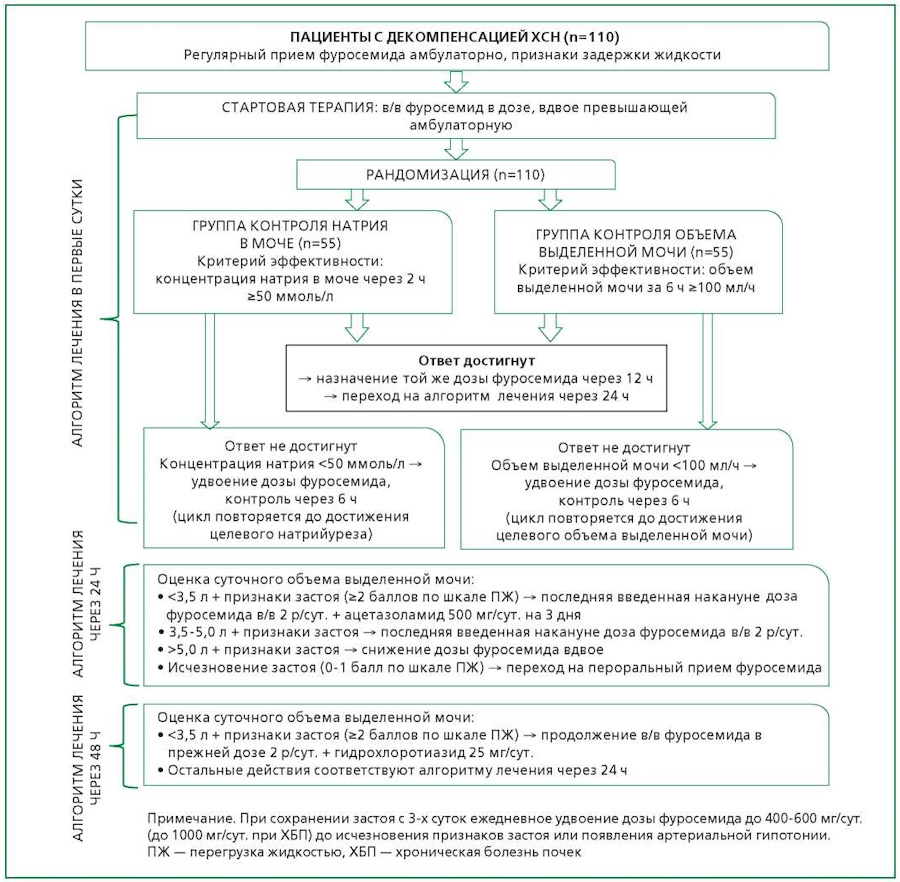
Aim. To compare the efficacy and safety of furosemide dose titration during the first 24 hours of treatment for decompensated heart failure (HF) with fluid retention, based on either urine volume or spot urinary sodium concentration.
Material and methods. This prospective, randomised, open-label, single-center study included 110 patients with decompensated HF, signs of fluid retention, and regular furosemide use. The initial intravenous furosemide dose was twice the outpatient dose. In the first group (n=55), efficacy was assessed by 6-hour urine output: if ≥100 mL/h, the same dose was repeated after 12 hours; if response was insufficient, the dose was doubled every 6 hours until the target urine volume was achieved. In the second group (n=55), the 2-hour spot urinary sodium concentration was used: if ≥50 mmol/L, the same dose was repeated after 12 hours; if <50 mmol/L, the dose was doubled every 6 hours until target natriuresis was reached. After 24 hours, if urine output was <3.5 L with persistent congestion, the last furosemide dose was repeated as a bolus twice daily with the addition of acetazolamide 500 mg/day for 3 days. If the response remained insufficient after 48 hours, hydrochlorothiazide 25 mg/day was added without changing the furosemide dose. For urine output between 3.5 and 5 L, the furosemide dose was unchanged; for output >5 L with signs of congestion, the dose was halved. Once congestion resolved, patients were switched to oral furosemide.
Results. Mean patient age was 74±9.2 years; male proportion was 52.7%. The median intravenous furosemide dose in the first 24 hours was 160 mg in the urine sodiumguided group versus 80 mg in the urine volumeguided group (p<0.001). At 72 hours, the urine sodiumguided group showed greater congestion relief (median fluid overload score 4 vs. 6, p<0.001), lower body weight (median 83 vs. 88 kg, p=0.024), and less dyspnea (VAS 4 vs. 7; Likert 2 vs. 3; p<0.001 for both). Hospital stay was shorter by 2 days in the sodiumguided group (9±1.6 vs. 11±2.6 days, p<0.001), and persistent congestion at discharge was less frequent (7.3% vs. 20%, p<0.001). The composite of allcause death or HF rehospitalization at 3 months was lower in the urine sodiumguided group (21.8% vs. 36.4%, p=0.02). No significant betweengroup differences were observed in inhospital complication rates.
Conclusion. In patients hospitalised with decompensated HF, furosemide dose titration during the first 24 hours based on urinary sodium concentration (compared to the urine volumebased approach) was associated with the use of higher doses, leading to greater weight loss, better congestion relief, an
Aim. To identify risk factors of in-hospital mortality in patients with hyponatremia in a cardiology hospital setting.
Material and methods. This single-center retrospective study included 119 patients (mean age 71.2±12.7 years) admitted to a cardiology center from June 2024 to March 2025, who had at least one recorded instance of hypotonic hyponatremia (sodium level <135 mmol/L). Patients with acute coronary syndrome and myocardial infarction were excluded. Statistical analysis was performed using logistic regression and ROC analysis.
Results. The prevalence of hyponatremia was 4.1%. In-hospital mortality reached 16.0% (19 deaths). Hypervolemic hyponatremia, typical for patients with chronic heart failure, was the most common type (48.7%). According to multivariable regression analysis, factors associated with in-hospital mortality were minimum sodium level (OR 0.843; 95% СI 0.749-0.950; p=0.005), glomerular filtration rate (OR 0.957; 95% СI 0.921-0.991; p=0.021), and left ventricular ejection fraction (OR 0.949; 95% СI 0.907-0.994; p=0.027). The constructed predictive model demonstrated good discriminative ability: AUC=0.851 with sensitivity of 78.6%, specificity of 76.7%, and overall accuracy of 77.0%.
Conclusion. Minimum serum sodium level is a risk factor of in-hospital death, particularly in patients with reduced glomerular filtration rate and left ventricular ejection fraction.

Aim. To evaluate the association between lipoprotein(a) [Lp(a)] levels and the presence and severity of coronary artery calcium (CAC) in patients without clinically established atherosclerotic cardiovascular disease (ASCVD).
Material and methods. The study included1,777 outpatients without clinical manifestations of ASCVD who underwent routine preventive examination in the MEDSI clinic network (Moscow and Moscow region) between 2021 and 2025. Eligible patients had both noncontrast computed tomography with quantitative CAC scoring and laboratory measurement of Lp(a). Patients were classified according to CAC values: 0, >0, >100, >300 Agatston units. Lp(a) was evaluated as a continuous variable and according to clinically relevant thresholds >30, >50 and >70 mg/dL.
Results. The median age of participants was 47 [41; 55] years, and 43.2% were women. Coronary calcification (CAC >0) was detected in 30.6% of patients. Compared with individuals without calcification, patients with CAC >0 were older (54 vs 45 years; p <0.001), more frequently had arterial hypertension (58.9% vs 39.1%; p <0.001) and diabetes mellitus (7.7% vs 2.4%; p <0.001). Median Lp(a) levels were significantly higher in patients with CAC >0 — 25 [8; 87] mg/dL versus 15 [6; 59] mg/dL in those with CAC=0 (p <0.001). In multivariable logistic regression, Lp(a) remained significantly associated with the presence of CAC >0 (adjusted odds ratio [AOR] 1.007 per 1 mg/dL; 95% confidence interval [CI] 1.004-1.009; p <0.001). The association persisted when using clinical thresholds: for Lp(a) >30 mg/dL AOR was 1.81, for >50 mg/dL — 1.89, and for >70 mg/dL — 2.06 (all p <0.001). Higher Lp(a) values were more prevalent among patients with calcification: in those with CAC >0, the proportions of Lp(a) >30, >50 and >70 mg/dL were 47.8%, 38.4% and 29.8%, respectively. Severe calcification (CAC >300) was found in 2.4% of individuals without ASCVD.
Conclusion. Elevated Lp(a) levels are independently associated with subclinical atherosclerosis defined by CAC, even after adjustment for traditional risk factors. Combined assessment of Lp(a) and CAC helps identify patients at “hidden” very high cardiovascular risk and design strategies for early preventive and therapeutic interventions.

Aim. To identify genetic variants associated with the risk of developing anthracycline-induced cardiovascular toxicity during antitumor therapy in patients with follicular lymphoma.
Material and methods. The prospective study included 83 patients diagnosed with non-Hodgkin B-cell follicular lymphoma who received chemotherapy. Based on the results of follow-up standard and speckle-tracking echocardiography, the patients were divided into 2 groups: Group 1 — median age 59.0 (51.5; 69.0) years old, of which 44.1% were men (n=15), Group 2 — median age 55.0 (47.0; 66.5) years old, of which 55.1% were men (n=27)). Clinical, demographic, and laboratory assessments were performed, including high-throughput sequencing.
Results. Minor alleles of rs2072708, rs2072710, rs2075939 NCF4, rs1443638, rs2306422, rs72547284, rs11661275 CELF4, CYBA, and FHOD3; rs246232 ABCC1; rs3749442 ABCC5 are associated with an increased risk of anthracycline-induced cardiovascular toxicity. Minor alleles of rs2233260, rs3833910, rs7232329, rs8096379, rs200571909, rs625223, rs2566514 MYL2, MYOM1, NEB and NOS3; rs1128503, rs2032582, rs2214102, rs2235013, rs2235033, rs4728699 ABCB1; rs212088, rs35604 ABCC1; rs1056892 and rs2835286 CBR3; rs1549758 NOS3, rs3731750 TTN is associated with a reducedlikelihood of complications.
Conclusion. This study identified several novel genetic variants associated with the risk of cardiovascular toxicity, highlighting the potential for developing personalised approaches to anticancer therapy.

Aim. To study quantitative and morphological parameters of myocardial injury using cardiac magnetic resonance imaging (MRI) with late gadolinium enhancement in patients with acute myocardial infarction and to identify factors associated with scar zone size.
Material and methods. The single-centre observational study included 202 patients (91% men) with ST-segment elevation (86%) and non-ST-segment elevation (14%) MI, aged 57 (50; 61) years. Primary percutaneous coronary intervention was performed in 136 patients (67%), and pharmacoinvasive revascularisation was performed in 66 patients (33%). On days 7–10, examination was performed, including echocardiography (Echo) and magnetic resonance imaging (MRI) of the heart with contrast. Based on cardiac MRI results patients were divided into three groups: Group 1 — 43 patients with LV scar burden of <5% or its absence: Group 2 — 83 patients with LV scar burden of 5-20%; Group 3 — 76 patients with LV scar burden of >20%. One-factor logistic regression analysis was used to identify variables that help diagnose different scar sizes.
Results. Patients in Group 3 were more likely to have type 2 diabetes mellitus compared to Group 2. Non-ST-segment elevation MI was more common in Group 1 compared to Groups 2 and 3 (p1-2,3 <0.05); pathological Q waves were diagnosed in Group 3 12.4 and 1.6 times more often than in Groups 1 and 2, respectively (p1-2,3;2-3 <0.001). It was also noted that Group 1 received thrombolytic therapy more quickly than Group 3 (p=0.032). Echo data revealed a predominance of indexed left ventricular (LV) volume parameters and the LV myocardial mass index in Group 3 compared to Groups 1 and 2, while the ejection fraction (EF) was minimal in Group 3 (p1,2-3 <0.05). MRI results revealed additional differences in the end-systolic volume index and LVEF between Groups 1 and 2. According to cardiac MRI results, the ratio of peri-infarction heterogeneous zone mass to the scar mass in Group 1 was 123.3 (81.3; 182.1) %, in Group 2 — 77.2 (57.8; 112.8) %, in Group 3 — 42.9 (29.4; 56.4) % (p1-2,3;2-3 <0.05). In Group 1, reperfusion injury was detected in only one patient (2.3%), in Group 2 — in 34.9% of cases, and in Group 3 — in 78.9% (p1-2,3;2-3<0.05). According to the regression analysis results, the following general significant indicators were found for the absence of a scar zone or SM/LVMM <5% and SM/LVMM >20%: high-sensitivity troponin I, N-terminal pro-brain natriuretic peptide; according to EchoCG data — end-systolic volume index, EF, LV myocardial mass index; according to MRI data — indexed volume indicators, EF, indexes of local contractility and global contrast.
Conclusion. A small scar burden had no adverse effect on cardiac morphological or functional parameters in patients with acute myocardial infarction who had no detectable scar or only a minimal scar burden (scar mass/left ventricular myocardial mass <5%) on late gadolinium enhancement cardiac MRI. Type 2 diabetes mellitus and pathological Q waves on electrocardiography, elevated blood levels of high-sensitivity cardiac troponin I and N-terminal pro-B-type natriuretic peptide, as well as reduced left ventricular ejection fraction and increased left ventricular volumes assessed by echocardiography and cardiac magnetic resonance imaging, were associated with a greater scar burden (scar mass/left ventricular myocardial mass >20%).
Aim. To characterise the clinical-laboratory profile of adults with type 1 diabetes (T1D) hospitalised for diabetic ketoacidosis (DKA) and to assess echocardiographic parameters according to DKA severity and the presence of acute myocardial injury.
Material and methods. The single-center cross-sectional study included 160 patients aged 18 years and older with T1DM presenting with DKA. Based on DKA severity, patients were classified into mild (n=31), moderate (n=94), and severe (n=35) groups; additionally, patients were stratified by the presence or absence of AMI into AMI «positive» (n=90) and AMI «negative» (n=70) groups. Within the first 24 hours of hospitalisation, clinical evaluation, assessment of SOFA, APACHE II, and Glasgow Coma Scale scores, laboratory tests (glucose, HbA1c, high-sensitivity troponin I, N-terminal pro-brain natriuretic peptide, creatinine, urea, C-reactive protein, acid-base status parameters, lactate), as well as standard and speckle-tracking echocardiography were performed.
Results. In 72.0% of patients, DKA developed in previously diagnosed type 1 diabetes with poor treatment adherence, whereas in 28.0% it occurred at disease onset. Severe DKA was associated with longer diabetes duration (p=0.015), hemodynamic instability, higher APACHE II scores, lower Glasgow Coma Scale scores, and myocardial injury in all patients of this subgroup (p<0.001). Compared with injury-negative patients, the injury-positive group had longer diabetes duration (p=0.038), lower blood pressure, higher heart rate, more severe acidosis, and higher troponin I, NT-proBNP, creatinine, urea, glucose, and lactate levels (all p<0.001). Echocardiography showed higher left ventricular ejection fraction (p<0.001), larger indexed left atrial volume (p=0.007), less negative global longitudinal strain and right ventricular strain (both p<0.001), and lower global work efficiency (p<0.001), TAPSE (p=0.048), and peak atrial contraction strain (p=0.005). In the multivariable model, admission glucose (OR 1.08; 95% CI 1.00-1.16; p=0.04) and anion gap (OR 1.31; 95% CI 1.16-1.48; p<0.001) remained independently associated with myocardial injury.
Conclusion. DKA severity in adult patients with T1DM is accompanied by worsening metabolic and hemodynamic disturbances and an increased incidence of AMI. The presence of AMI is associated with alterations in myocardial deformation parameters and right heart function, despiteb preserved or increased left ventricular ejection fraction.

Aim. Тo evaluate the bioequivalence of Valsartan + Indapamide 160 mg + 1.5 mg modified release tablets developed by Gedeon Richter Polska Sp. z o. o. (Poland) compared to the reference products Diovan® (Siegfried Barbera S.L. (formerly Novartis Farmaceutica S.A.), Spain) coadministered with Arifon® Retard (Servier RUS LLC, Russia).
Material and methods. Three randomised, single-centre, open-label, crossover studies with two sequences were conducted in a population of healthy adult volunteers of both sexes aged 18–45 years who met the inclusion criteria and had no exclusion criteria. Study A included four periods assessing single-dose administration under fasting conditions (n=56), Study B included two periods assessing single-dose administration under fed conditions (n=52), and Study C included two periods assessing multiple-dose administration under fasting conditions (n=52). The washout period was at least 14 days between all periods. Plasma concentrations were determined using validated analytical methods of high-performance liquid chromatography and tandem mass spectrometry. However, as valsartan was not modified release its exposure was not measured in all studies. Pharmacokinetic parameters including AUC0-inf, Cmax and AUC0-t in study A and B, and AUC0-τ, Cmax,ss and Cτ,ss in study C were determined using non-compartmental analysis. Bioequivalence was concluded if the 90% confidence intervals for the test/reference ratios of given parameters fell within the 80.00-125.00% range, except for Study A valsartan Cmax parameter, where the range was widened to 78.05-128.13%.
Results. In Study A, the GMRs for AUC0-t and Cmax were 105.97% and 108.15% for indapamide and 104.07% and 104.15% for valsartan, respectively.In Study B, GMRs for the specified parameters for indapamide were 101.03% and 96.47%. In Study C, the GMR values for AUC0-τ and Cmax,ss were 109.69% and 111.75% for indapamide. All 90% confidence intervals were within the predefined bioequivalence limits. The drug was well tolerated. Only mild and well-known treatment-emergent adverse events were reported, without any treatment discontinuation.
Conclusions. The fixed dose combination of valsartan and indapamide 160 mg + 1.5 mg, modified released tablets manufactured by Gedeon Richter Polska Sp. z o. o. is bioequivalent to Diovan® co-administered with Arifon® Retard, and is safe and well tolerated. The results support the use of this fixed dose combination as an effective alternative to the concurrent administration of the reference products for the treatment of hypertension
PREVENTIVE CARDIOLOGY AND PUBLIC HEALTH
Aim. To develop and validate a Composite Index of Dispensary Follow-up Effectiveness (CIDFE) for the adult population based on compulsory health insurance (СHI) data for the comparative assessment of 85 constituent entities of the Russian Federation and prioritisation of management interventions.
Material and methods. A population-based observational study was conducted (unit of observation: constituent entity of the Russian Federation, n = 85, period 2023–2024). The index comprises 7 sub-indices grouped into two domains based on Donabedian’s model: “Process” (60%: DF coverage, enrolment activity, intensity, and completeness of follow-up) and “Outcome” (40%: hospitalisation rate, emergency medical service call rate, mortality among DF patients). Normalisation was performed using the min-max method (0–100 points); aggregation used a weighted sum in accordance with OECD methodology. Robustness was assessed by Monte Carlo simulation (10,000 iterations, ±20% weight perturbation); criterion validity was evaluated by correlation with Rosstat 2024 mortality data. Regions were stratified into 4 quadrants based on median CIDFE and mortality values.
Results. The mean CIDFE for 2024 was 65.65±9.77 points (Me=67.55; range 31.60-84.33; coefficient of variation 14.9%). Class I (≥75 points) was assigned to 10.6% of regions, Class II (55-75) to 75.3%, and Classes III-IV to 14.1%. Robustness was confirmed by a high intraclass correlation coefficient (ICC=0.994; p <0.001); temporal stability by the correlation between CIDFE 2023 and 2024 (r=0.671; p <0.001). Quadrant analysis revealed that mortality in Quadrant A (high CIDFE + low mortality; n = 25) was 4.4‰ lower than in Quadrant D (low CIDFE + high mortality; n=19): 11.1±2.6‰ versus 15.4±1.1‰ (U=0; p <0.001; Cohen’s d=2.06). For a typical region with a population of approximately 1.5 million, this difference corresponds to roughly 660 preventable deaths per year.
Conclusion. The CIDFE is the first Russian composite instrument for monitoring the quality of dispensary follow-up at the regional level, based on routine СHI data. The index demonstrates high robustness and stability, ensuring its suitability for annual monitoring. Quadrant analysis enables the identification of regions requiring priority systemic interventions and the selection of benchmark entities for disseminating best DF practices.
CLINICAL CASE

Pulmonary arterial hypertension (PAH) associated with connective tissue diseases is a lifethreatening condition in which elevated pressure in the pulmonary vasculature leads to a marked increase in right heart afterload, causing severe right ventricular failure and premature death. PAH is most frequently associated with systemic sclerosis and systemic lupus erythematosus. Polymyositis is a rare autoimmune disease resulting from aberrant activation of cytotoxic Tlymphocytes and macrophages against autologous muscle tissue, leading to inflammatory myopathy. In polymyositis, the inflammatory process may involve the vascular bed (small pulmonary artery vasculitis), which can lead to PAH. PAH in polymyositis is an extremely rare entity. This article presents a clinical observation of a patient with idiopathic polymyositis who developed a fatal complication — PAH — over several years. Key diagnostic aspects, clinical course features, and characteristic signs of the disease are demonstrated. The need for a multidisciplinary approach in managing patients with this condition is emphasised, and the importance of accumulating data on pulmonary hypertension in polymyositis is highlighted
REVIEWS

The aim of this review is to systematize current data on the mechanisms of action of pasteurized Akkermansia muciniphila in obesity and metabolic syndrome and to evaluate its clinical potential. Obesity and metabolic syndrome are leading risk factors for cardiovascular disease. In recent years, compelling evidence has accumulated on the important role of intestinal microbiota dysbiosis in the pathogenesis of these conditions, opening up prospects for the development of new therapeutic strategies aimed at its correction. Pasteurized A. muciniphila is of interest as a potentially promising postbiotic capable of preserving the effects of live bacteria while simultaneously enhancing its safety profile. Pasteurized A. muciniphila has been shown to exert a multicomponent effect, including reduction of intestinal barrier permeability, metabolic endotoxemia, and chronic low-grade inflammation, modulation of intestinal glucose transport, interaction with the gut-brain axis, and regulation of energy metabolism. Currently, efficacy data remain limited and are based primarily on preclinical studies. A. muciniphila has been shown to reduce body weight and fat mass, improve glycemic control, increase insulin sensitivity, and reduce inflammatory and fibrotic changes in the liver and adipose tissue. However, there remains a need to standardize postbiotic formulations, including pasteurization and dosing regimens, and to conduct large, long-term randomized trials to determine clinical efficacy and safety.
Announcements
2026-09-30
XXI Национальный конгресс терапевтов: от клинических рекомендаций к повседневной практике
19–21 октября 2026 года в Москве, в Президент-Отеле, состоится XXI Национальный конгресс терапевтов. Российское научное медицинское общество терапевтов приглашает коллег к обсуждению современных подходов к диагностике, лечению и организации медицинской помощи.
| More Announcements... |

ISSN 2225-3653 (Online)